






































Warehouse
Management System
A warehouse management solution designed to optimize inventory, storage, picking, and distribution operations through real‑time data, RFID identification, and automated workflows.
*Based on published warehouse operations research, not a guaranteed figure for every site. See reference below.

What a Warehouse Management System does
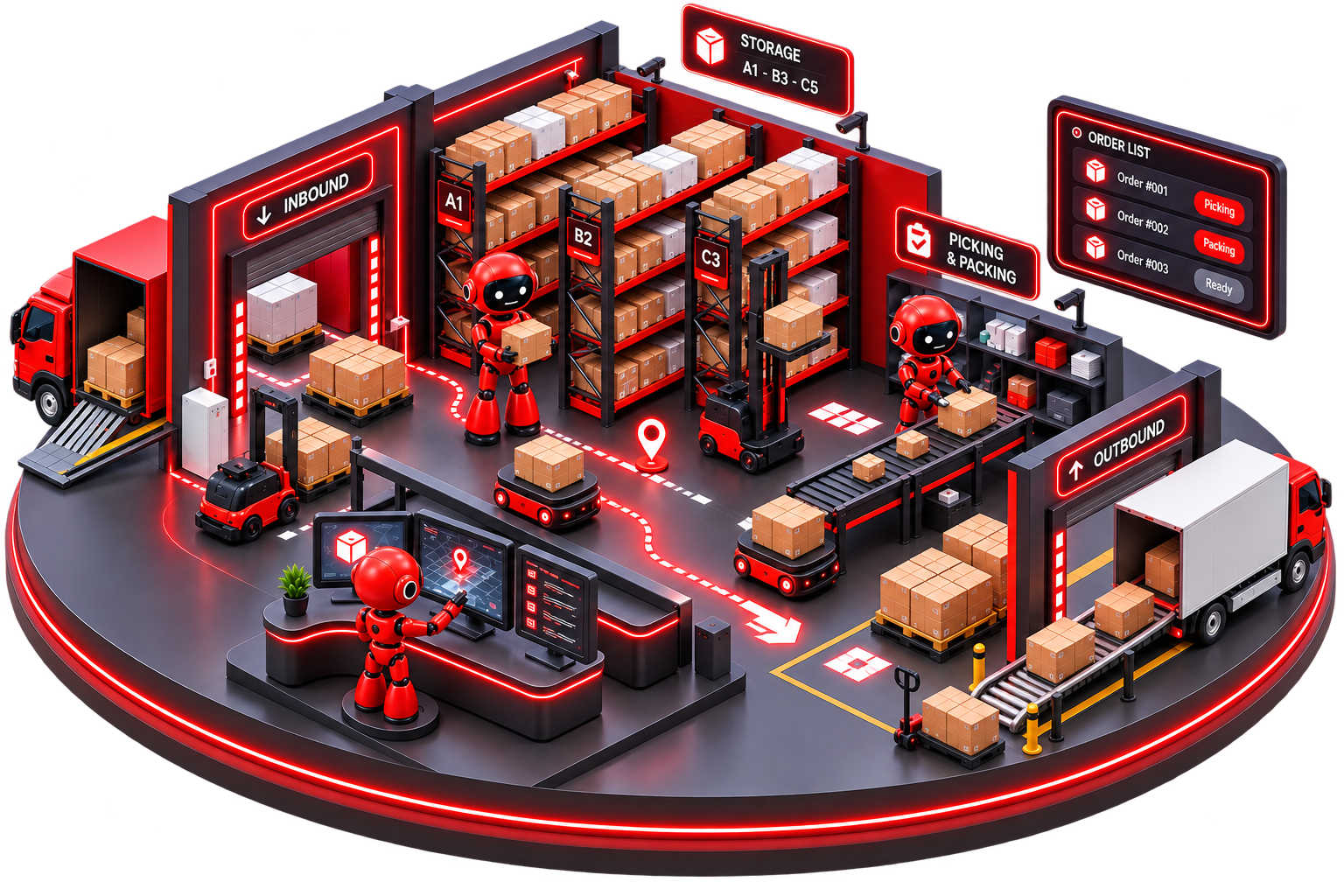
Employees gain the advantage of storing goods flexibly, even goods that vary in shape, weight, and colour. Algorithms and item code scanners assist with storage handling and record every item's position. When an order is placed, the system guides the picker straight to the pre‑recorded location, turning a warehouse into a coordinated, trackable operation.
Distribution Warehouses
Focused on the fast movement of goods between suppliers and end destinations, prioritizing throughput and order accuracy.
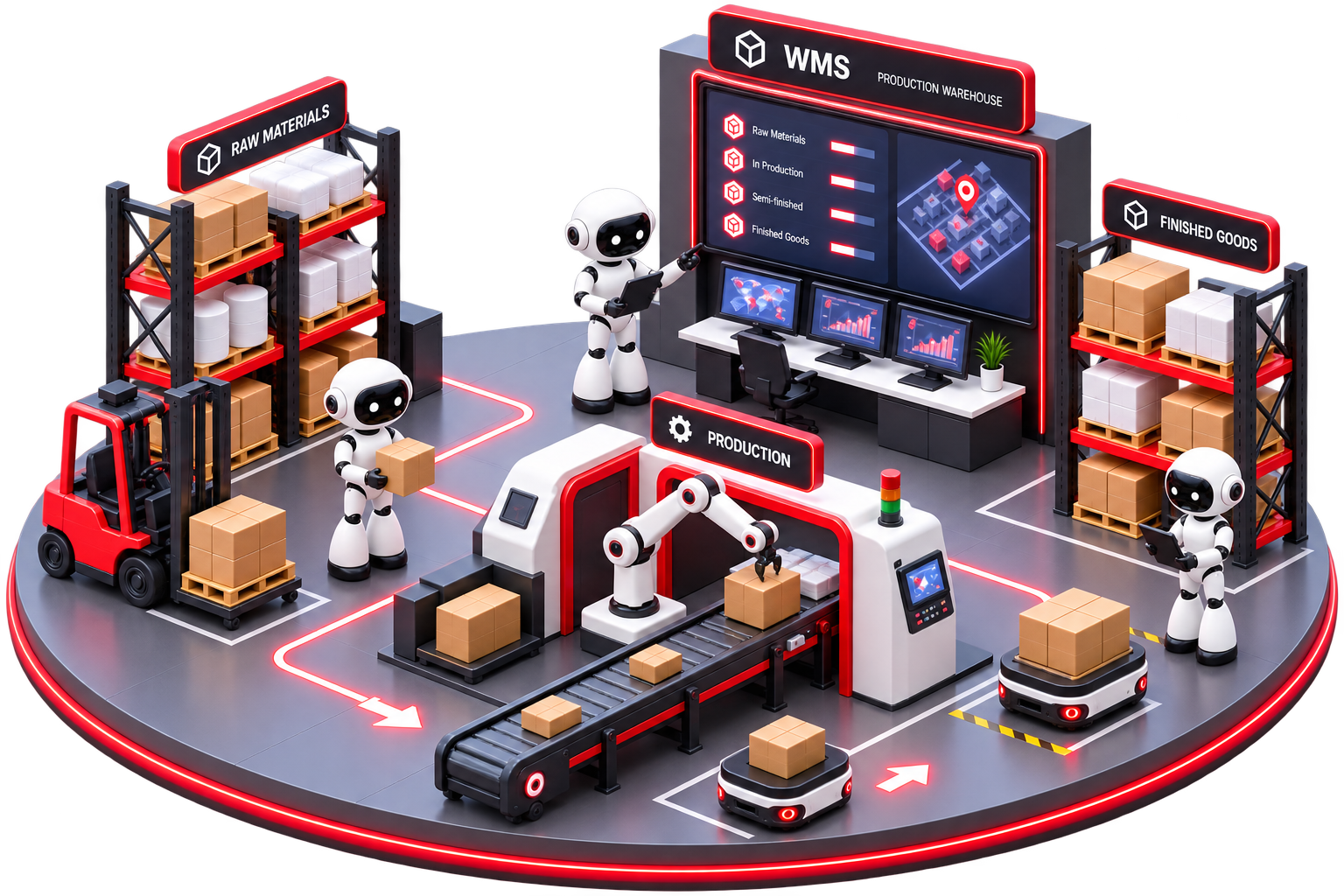
Production Warehouses
Used for the storage of raw materials, semi‑finished products, and finished products inside a production facility.
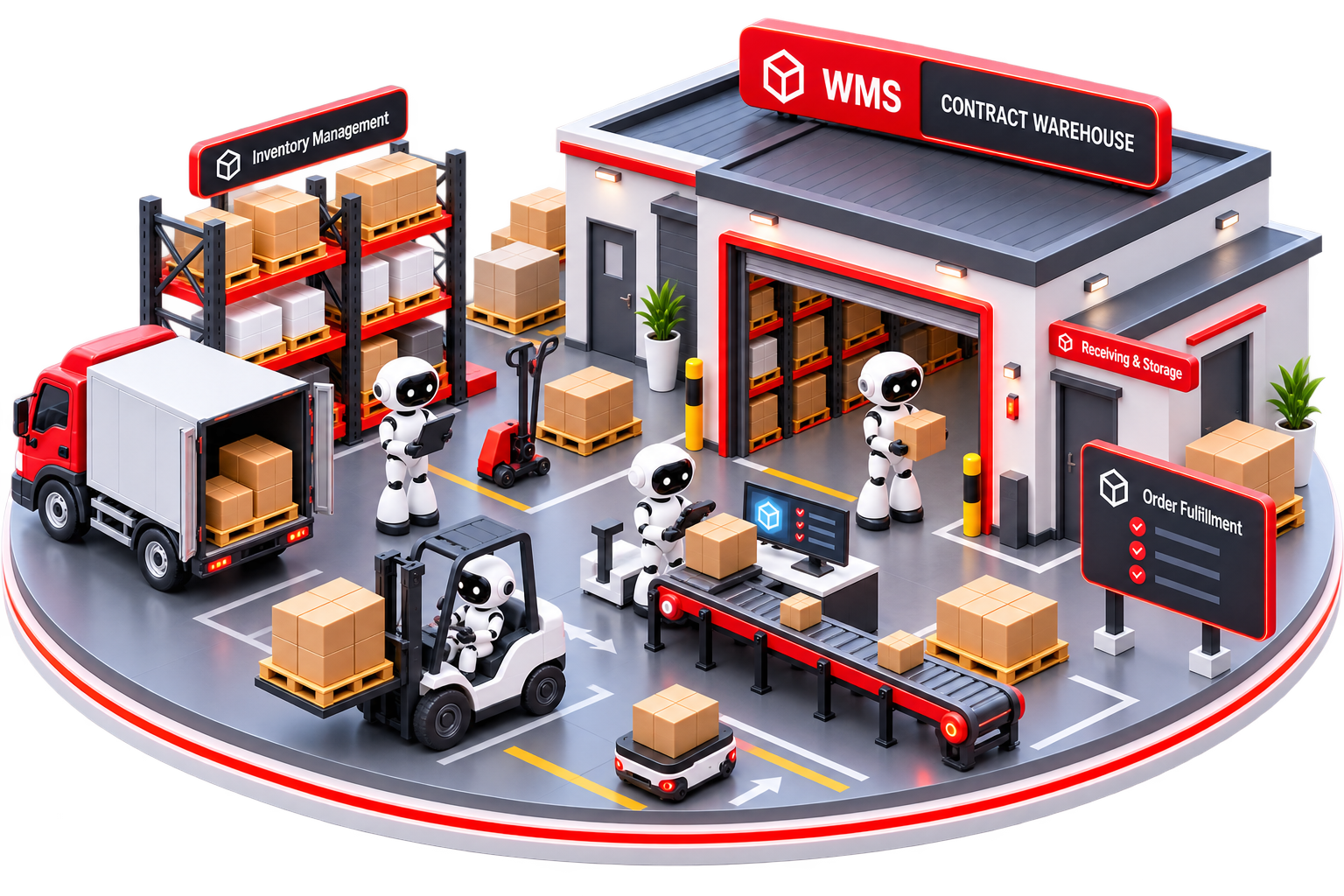
Contract Warehouses
Third‑party operated facilities providing storage and fulfilment services on behalf of client businesses.
Where warehouses lose the most
A manual warehouse runs into the same gaps every day, and one activity quietly eats most of the budget. Explore the breakdown.
Can go to order‑picking alone in many warehouses. Tap an issue below to see why it compounds.
*Figure varies by warehouse type and operation; explore the cost breakdown alongside.
Cost breakdown by activity
van den Berg, et al., 1999Our proposed solution
Warehouse management faces several significant challenges that impede efficiency, accuracy, and overall operational effectiveness. WIT.ID answers the core problem with two connected solution tracks.
Core problem
- Manual data entry errors
- Limited visibility and traceability
- Ineffective space utilization
- Items frequently lost
Information System
Digitizes the paperwork: master data, receiving, picking, and shipping all live in one system of record.
RFID / RMS & IoT System
Adds the sensing layer: RFID reads and object detection confirm what the information system records is physically true.
Tap a step to see what it solves.
More efficient & effective labour
Smart task assignment keeps every picker working a balanced route instead of guessing where to go next.
Reducing manual labour & human error
RFID and barcode capture replace re-typed data, so the number on the screen matches what's actually on the shelf.
Improved operational visibility & traceability
Every item's location and movement is logged in real time, so supervisors see issues as they happen, not after a stock count.
More effective rack management
Slotting suggestions and rack mapping make better use of the space you already have, before you consider expanding.
Eliminate item lost
Tracked handling and RFID checkpoints mean items are far less likely to go missing between receiving and shipping.
Operation based on SLA
Dashboards track picking, shipping, and fulfilment speed against the SLAs you've promised customers.
Feature set
A modular feature map: each capability is scoped to a real workflow inside the warehouse, from user access to shipping and RFID tracking.
Inventory Management
Real‑time visibility over every item, location, and stock level, with forecasting to plan replenishment ahead of demand, and alerts before something expires or runs out.
- Continuous Tracking Real‑Time
- Location Tracking Real‑Time
- Inventory Levels & Threshold Alerts Stock Status
- Item Stocks / Non‑Item Stocks Classification
- Historical Analytics & Demand Variability Forecasting
- Alert & Disposal Management Expiration
- Customizable Reports & Analytics Reporting
Order Management
Every order is processed, prioritized, verified, and tracked from creation to fulfilment, with allocation logic that assigns inventory and staff automatically.
- Order Creation & Modification Processing
- Real‑time Order Tracking Visibility
- Status Notification Visibility
- RFID Scanning & Double‑check Verification
- Inventory Allocation Assignment
- Order Assignment to Staff/Workstations Assignment
RFID & Barcode
RFID scanning and barcode verification work together to keep inventory counts accurate in real time, with mobile access and location mapping across the facility.
- Hardware Integration Scanning
- Barcode & RFID Verification Accuracy
- Stock Opname Update
- Cycle Counting & Auditing Update
- Alert on Mismatch Update
- RFID‑based Location Tracking Mapping
- Mapping RFID Signal Mapping
User Management & Warehouse Layout
Role‑based access with a full activity log, plus tools to map the warehouse and continuously optimize slotting for faster picking.
- User List Access
- User Role Access
- User Access Log Audit
- Warehouse Mapping Layout
- Slotting Optimization Layout
Receiving, Shipping & Returns
From putaway on arrival to transportation on dispatch, with a dedicated return management flow to close the loop.
- Quality Inspection & Sorting Receiving
- Put Away (stock & non‑stock) Receiving
- Picking Fulfilment
- Advance Shipping Notice Shipping
- Cross Docking Shipping
- Return Processing Returns
General architecture
Data moves through four layers, from the sensors on the floor to the interface your team actually uses, so every scan becomes a decision, not just a record.
Sensing Layer
- RFID Tag
- RFID Reader
- Object Detection Sensor
- Intelligent Sensor
Network Layer
- Data Storage & Cloud Computing
- Other ERP integration
- Analytics: build, test, validate
- Pattern trend & decision making
Service Layer
- Business logic
- Service division
- Service integration
- Service composition
Interface Layer
- Application frontend
- Interfaces & application API
- Service repository (BUS)
- WMS & other ERP endpoints
RFID technology
RFID tags are small electronic devices carrying a unique identifier and, sometimes, additional data, attached to items, pallets, or containers for identification and tracking.
Flexible & Printable UHF On‑Metal Label
UHF Nylon Cable Tag
UHF High Temperature Metal Tag
UHF Pallet Tag
RFID Printer
EncodingRFID Reader: Handheld
CaptureFixed Antenna
CoverageChoose how it's deployed
The same RFID identification logic adapts to how your floor actually operates: handheld for spot checks, forklift‑mounted for continuous movement, or automatic gates for zero‑touch tracking.
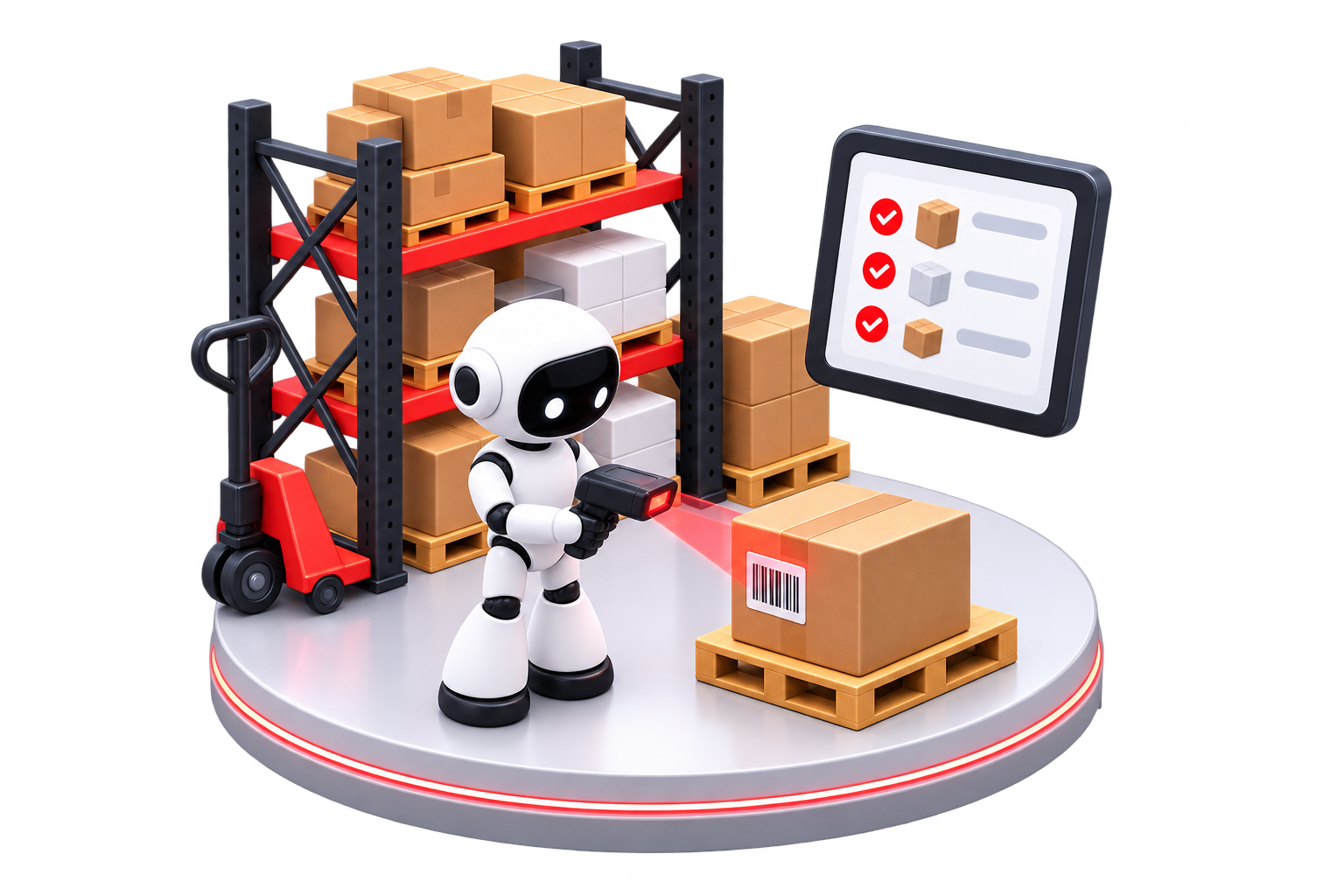
On Handheld
Portable devices used for inventory counts, item location verification, and asset tracking.
- Inventory count & asset tracking
- Order picking & packing
- Return processing
- Receiving & put away
- Cross‑docking optimization
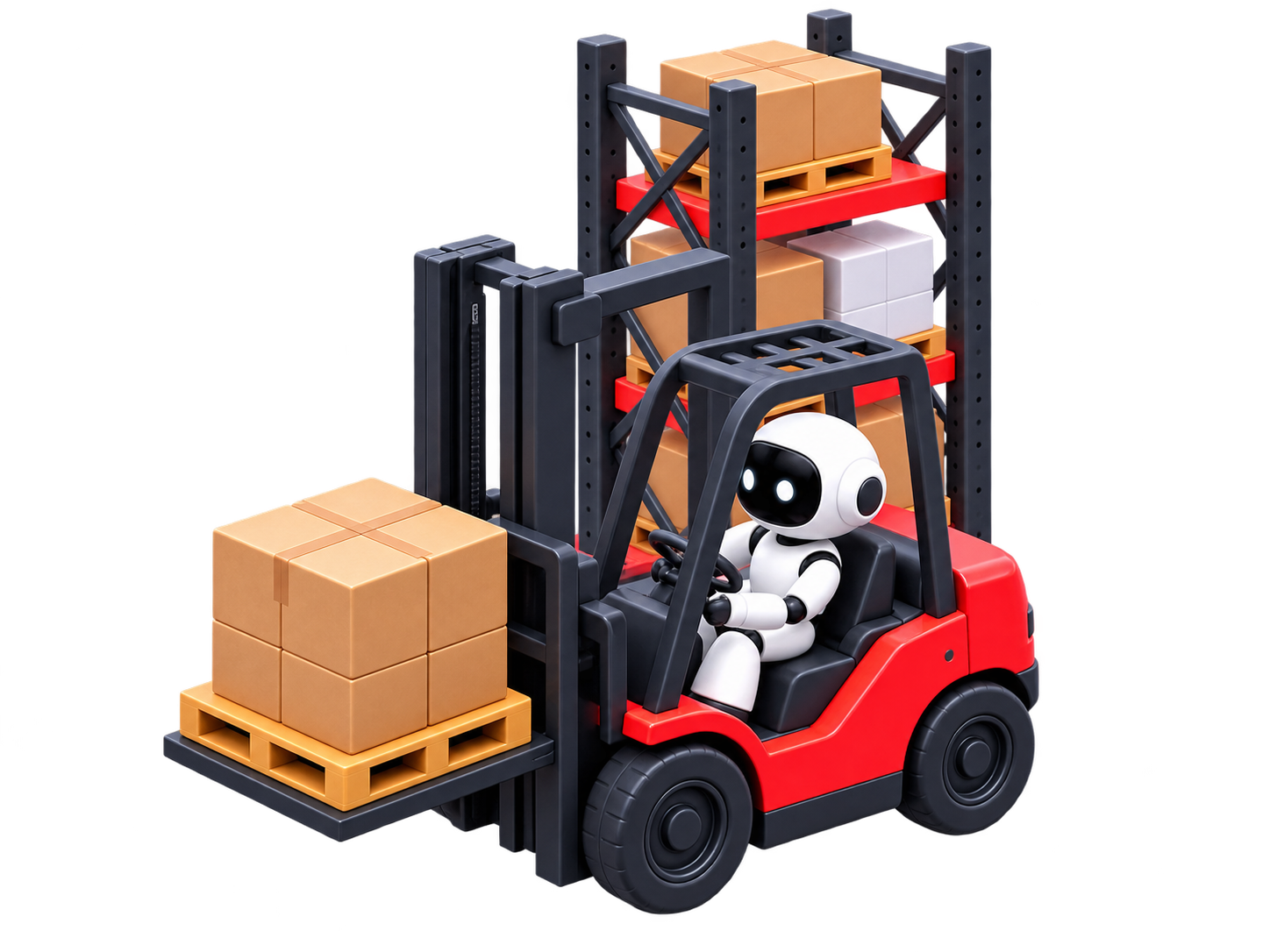
On Forklift
RFID tags and readers mounted on forklifts track and manage the movement of goods and materials within the facility.
- RFID tagging & tracking
- Real‑time data capture
- Inventory management
- Automated data processing
- Improved accuracy & efficiency
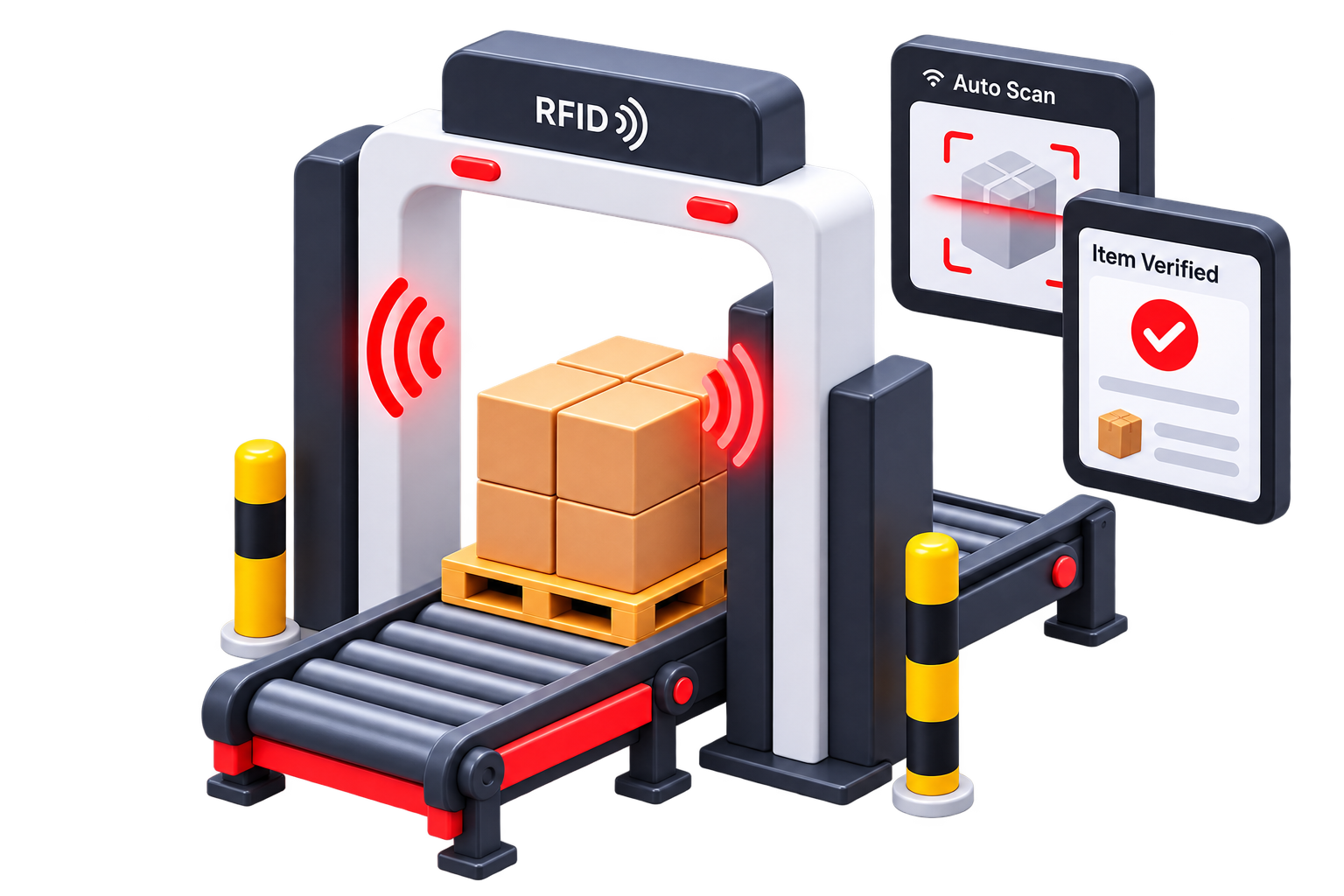
On Automatic Gate
RFID scanning gates installed at entry or exit points, equipped with antennas for automated tracking and inventory counts.
- Automated receiving & unloading
- Real‑time inventory tracking
- Automated shipping & loading
- Automated returns processing
- Security & anti‑theft measures
Assurance behind every deployment
Our commitment for the development and procurement of an integrated RFID / RMS management system for your warehouse.
Functionality
The RFID system functions according to the specifications and requirements outlined in the proposal and contract.
Integration Assurance
Seamless integration of the RFID system with your warehouse management and enterprise systems.
Customization & Scalability
The system can be customized to evolving warehouse needs and scaled as the business grows.
System Reliability & Uptime
A high level of system availability and uptime as per agreed Service Level Agreements (SLAs).
Compliance & Data Security
Compliance with relevant data privacy and security regulations in handling RFID data.
Tag Read Accuracy
A specified minimum accuracy rate for RFID tag reads within the warehouse environment.
Inside the dashboard
A single console for pallets, products, rack occupancy, and label activity, down to the exact aisle and rack position of every SKU.
Dashboard
Monday, 04 JuneTap a bar to see that day's throughput.